
Choosing Commercial Restroom Fixtures for Heavy Use: A Spec by Spec Checklist to Reduce Downtime
COMMERCIAL PLUMBING
5/12/20265 min read
Commercial restrooms in offices, schools, warehouses, and public buildings don’t get “light duty.” They’re hammered all day by constant use, occasional abuse, and aggressive cleaning routines. When something fails, you feel it immediately: complaints, sanitation issues, emergency calls, and restrooms taken out of service.
You can’t control how people use the space—but you can control how well it’s built. The key is choosing fixtures by the specs that actually affect durability, uptime, and ease of repair, not just by brand or aesthetics.
Use this spec‑by‑spec checklist as a practical filter before you approve any restroom package.
1. Toilets and flush valves: Durability, throughput, and serviceability
Flushometer type: For heavy use, piston‑type flushometers usually outperform diaphragm models. They handle pressure swings better, resist sediment, and maintain consistent flush volume in older or variable systems.
Gallons per flush (GPF): Aim for 1.28–1.6 GPF, depending on code and building goals. Ultra‑low‑flow options can look great on paper but often mean double‑flushes, clogs, and more service calls.
Vandal‑resistant features:
Look for these:
Concealed or recessed valves
Vandal‑resistant screws and covers
Reinforced china or stainless bowls
Solid metal trip levers
These details dramatically cut breakage and tampering.
Serviceability: Choose valves with universal repair kits, readily available parts, and single‑tool access. The less proprietary the internals, the faster your team can get a toilet back online.
2. Sinks and faucets: Water control without constant repairs
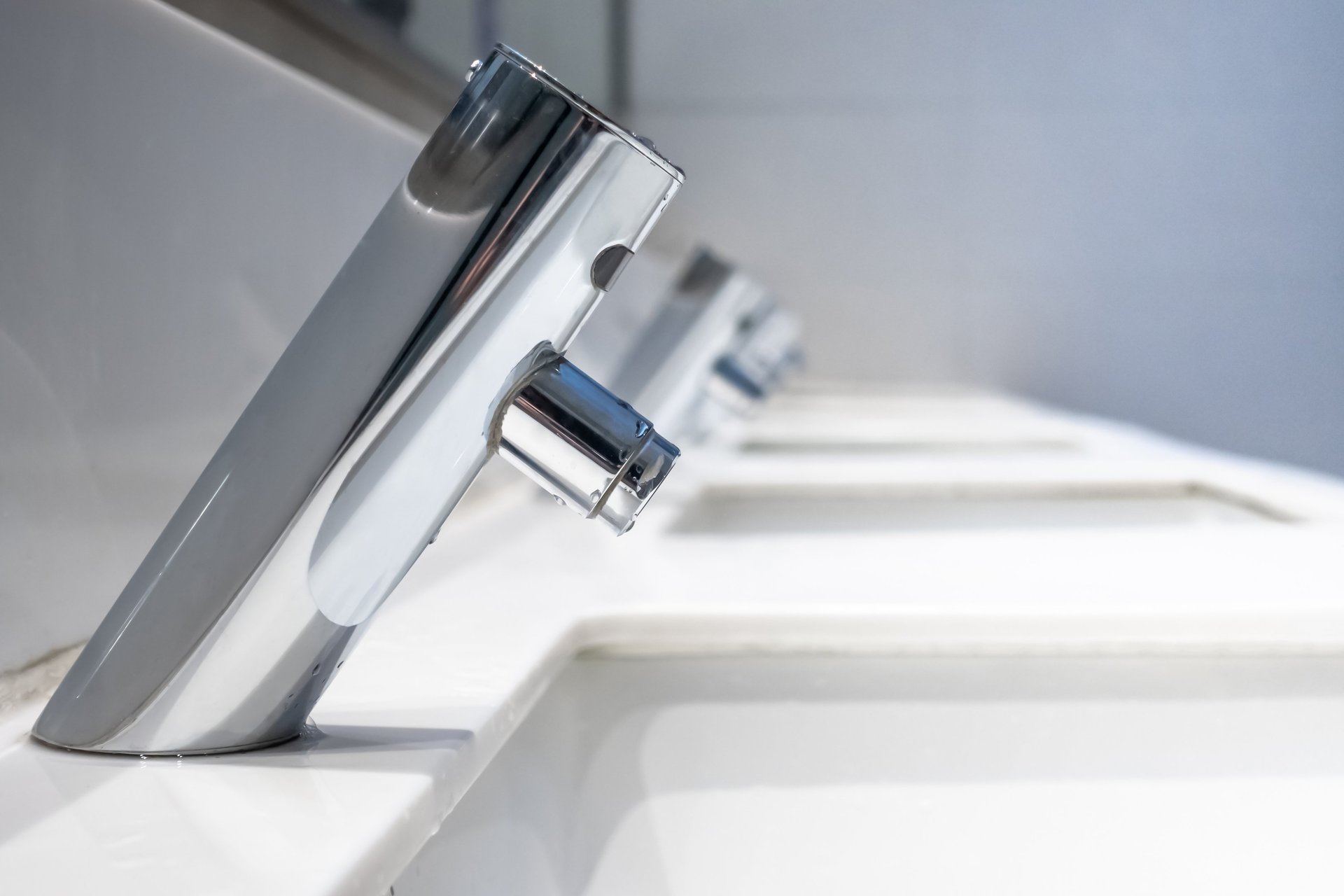
Activation type: Sensor faucets are ideal for hygiene and water savings, but only if they’re robust.
Prioritize these features:
Multi‑beam sensors for reliable detection
Automatic calibration to adapt to lighting and finishes
Hardwired power with battery backup
Battery‑only in a high‑traffic restroom is basically a recurring work order.
Flow rate and pattern: A 0.5 GPM aerator is standard, but the real test is splash control. A poorly designed outlet turns counters into puddles and floors into slip hazards.
Body and cartridge: Choose solid brass bodies with ceramic disc cartridges. Plastic bodies and rubber washers simply don’t hold up under constant cycling.
Sink material and support:
Vitreous china for most commercial spaces
Stainless steel for vandal‑prone or industrial areas
Solid‑surface troughs for easy cleaning and fewer seams
Wall‑hung sinks should be mounted on proper carriers, not just lagged into questionable framing.
3. Partitions: Abuse‑resistant privacy
Material selection: Partitions see kicking, slamming, moisture, and graffiti.
Rank materials like this for heavy use:
HDPE (solid plastic): Moisture‑proof, graffiti‑resistant, extremely durable
Phenolic: Very strong, excellent in humid or hose‑down spaces
Stainless steel: Durable with a premium look, but shows scratches
Powder‑coated steel: Budget‑friendly, but vulnerable to rust and chipping
Hardware and bracing: Look for continuous stainless hinges, heavy brackets, and vandal‑resistant fasteners. Floor‑mounted, overhead‑braced systems give the best stability in high‑traffic restrooms.
Cleanability: Smooth, non‑porous surfaces and minimal seams make it easier for janitorial staff to keep things sanitary and presentable.
4. Hand dryers and paper dispensers: Throughput and labor savings
Hand dryers:
High‑speed dryers can cut paper waste and refilling time, but only if they’re specified smartly:
Dry time: Under 12 seconds
Noise: Under 80 dB for offices and schools
Filtration: HEPA filters for hygiene (with easy replacement access)
Housing: Stainless or high‑impact polycarbonate
Always hardwire dryers where possible—plug‑ins loosen, overheat, and fail more often.
Paper towel dispensers:
If you’re sticking with paper, do this:
Choose high‑capacity roll dispensers
Use controlled‑use mechanisms to limit waste
Prefer universal rolls over proprietary systems unless you’re locked into a long‑term supply contract
5. Soap dispensers: Stop leaks before they start
Soap issues are sneaky downtime drivers—slippery floors, corroded hardware, and constant “empty” complaints.
Activation type:
Sensor‑operated dispensers shine in heavy use, if they’re built well:
Reliable infrared sensors that don’t misfire in bright or reflective spaces
Adjustable dosage to balance hygiene and refill frequency
Anti‑drip valves to prevent slow leaks down the wall or counter
Manual push models are fine in low‑traffic areas but wear out quickly when hammered all day.
Refill method: Top‑fill systems are ideal. Under‑counter refills are notorious for spills that soak cabinetry and flooring.
Reservoir style:
Bulk‑fill tanks: Lower cost per ounce, fewer changeouts, but need anti‑clog design
Cartridge systems: Cleaner and more controlled, but higher consumable cost
Construction and mounting: Look for stainless or high‑impact plastic housings, vandal‑resistant screws, and mounting that doesn’t flex when used.
6. Floor drains and cleanouts: Quietly preventing disasters
Most “restroom emergencies” trace back to drainage, not fixtures.
Drain bodies and strainers:
Look for these features:
Stainless‑steel strainers instead of plastic
Corrosion‑resistant drain bodies
Removable baskets where debris is common
Trap protection: Use trap primers or waterless trap seals to prevent sewer gas from entering the space, especially in restrooms that see intermittent use.
Cleanout access:
Make sure cleanouts have what they need:
Properly sized for the line
Clearly located and labeled
Accessible without demolition
Floor slope: Floors should slope ⅛–¼ inch per foot toward drains. Anything less invites standing water, odors, and slip hazards.
7. Accessories: The “small stuff” that fails first
Accessories are touched constantly and often abused, so spec them like critical components.
Grab bars: Use 18‑gauge stainless steel with concealed flanges and proper backing. Thin or poorly anchored bars loosen quickly and become a safety risk.
Toilet paper dispensers: Choose metal‑bodied, lockable, high‑capacity dispensers. Dual‑roll or jumbo‑roll units reduce refill frequency and theft.
Sanitary napkin receptacles: Look for rigid liners, hinged lids, and corrosion‑resistant materials. Wall‑mounted units should be solidly anchored, not wobbling on thin drywall.
Mirrors, hooks, and shelves:
Mirrors: Tempered glass or stainless in high‑abuse areas
Hooks and shelves: Solid metal, not plastic, with tamper‑resistant fasteners
These details shape user experience and maintenance workload more than most people realize.
8. ADA and code compliance: Build it right once
Downtime isn’t only about broken parts—non‑compliant restrooms can trigger inspections, complaints, and expensive rework.
Clearances and layouts:
Verify it’s right:
Clear floor space at toilets and lavatories
Turning radius for wheelchairs
Door swings that don’t block required clearances
A beautiful restroom that fails an accessibility check is still a failure.
Mounting heights:
Confirm heights for all of these:
Toilets and seats
Lavatories and counters
Grab bars
Dispensers, dryers, and mirrors
Even a few inches off can put you out of compliance.
Operability and reach:
ADA-compliant fixtures need these elements:
Usable with one hand
Operable without tight grasping, pinching, or twisting
Within reach ranges for seated users
Getting these specs right up front avoids costly tear‑outs and keeps every stall and fixture in service.
9. Maintenance access and standardization: The uptime multiplier
Even the toughest fixtures need service. How quickly that service happens depends on how you specify access and consistency.
Access and repairability:
Look for this:
Front‑access panels for valves and controls
Removable covers that don’t require specialty tools
Universal cartridges and parts across multiple fixtures
QR codes or clear labels linking to manuals and part numbers
If a tech has to disassemble half a wall to reach a valve, that fixture will be down longer—and more often.
Standardization strategy:
Where you can, standardize these:
Flush valves and faucet lines
Soap and towel systems
Partition hardware
Standardization simplifies training, reduces inventory, and shortens every repair. Over a portfolio of buildings, that’s a massive uptime advantage.
Final takeaway
Heavy‑use restrooms don’t have to be constant problem areas. When you choose fixtures spec‑by‑spec—focusing on durability, serviceability, compliance, and access—you turn them into reliable infrastructure instead of recurring emergencies. Build it tough, build it maintainable, and downtime becomes the exception, not the rule.
Contact
Main Office
Social
3560 S 2200 W
West Valley City, UT 84119
P.O. Box 25123
Salt Lake City, UT 84125
Monday – Friday:
7:00 am – 3:30 pm
Billing & Mailing Address
Hours
© Budd M. Rich Plumbing Company, DBA BRPI Mechanical. All rights reserved.